
How to Buy Biochar in Bulk: Choosing an Industrial Biochar Supplier
If you need to buy biochar in bulk for steelmaking, ferroalloys or another industrial process, the product itself is only half of the decision. The other half is the supplier: whether every batch matches the specification, whether the feedstock is what it claims to be, and whether material reliably reaches your plant. This guide walks industrial buyers through the process of choosing a biochar supplier — from the first request for a quote to a long-term contract.
A quick note on names: the market calls this material biochar, biocoal, biocarbon or bio-coke, and buyers often switch terms mid-correspondence. For metallurgical use, they usually mean the same thing — calcined biocarbon. If the terminology is confusing, our article calcined biocarbon vs biochar vs biocoal explains the differences.
What to define before you request a quote
A good quote depends on a good inquiry. The more precisely you describe your needs, the faster a supplier can tell you whether they can deliver — and at what price. Before contacting a biocoal supplier, prepare the following:
- Grade and key parameters. Minimum fixed carbon, maximum ash, moisture and volatile matter, plus limits on sulphur and phosphorus if they matter for your process. Calcined biocarbon typically reaches 85–95% fixed carbon; sulphur-free and phosphorus-free grades start from 80%.
- Particle size (fraction). Standard fractions range from 0–3 mm up to 25–50 mm. Injection carbon, charge carbon and submerged arc furnace reductant each need a different size; non-standard fractions can be produced on request.
- Volume. The quantity of the first order and the expected monthly or annual demand. A single trial container and a 12-month supply plan are priced differently.
- Delivery point. Your plant, a European port or a rail terminal — this determines the transport mode.
- Incoterms. Whether you want the price at the port of loading (FOB), delivered to your port (CIF/CFR) or delivered to your site (DAP/DDP).
If you do not yet know the exact specification, say so. A competent supplier will ask about your furnace and process and suggest a suitable grade — see the calcined biocarbon product lines for the starting options.
Supplier checklist: how to vet a biochar supplier
The biochar market is young, and quality varies widely between producers. For industrial users, inconsistent material is more expensive than a higher price per tonne: it disrupts furnace chemistry and forces you to re-adjust the charge. Check these points before you sign anything:
- Feedstock origin and proof of no wood. Ask what the biochar is made from and request documents on feedstock origin. Biocarbon from agricultural production waste avoids deforestation concerns, which matters for your ESG reporting and for customers further down your supply chain.
- Certificate of Analysis for every batch. The CoA should come from an independent laboratory and cover at least fixed carbon, volatile matter, ash, moisture, sulphur, phosphorus and calorific value. A single "typical analysis" on a website is not enough.
- Consistency between batches. Ask for CoAs from several past batches and compare them. Stable values matter as much as good values — calcination makes the properties of biocarbon more stable and predictable.
- Capacity and long-term contracts. Can the producer supply your monthly volume regularly, not just once? Is a long-term contract with fixed volume and price possible?
- Samples with lab data. A serious supplier will send a sample with its analysis so you can test it in your own lab before ordering.
- Additional documents. MSDS and feedstock-origin documents on request; for agricultural applications, an EBC certificate.
Rule of thumb: if a biochar supplier cannot provide an independent CoA for every batch, it cannot guarantee that the next delivery will behave in your furnace like the sample did.
What drives the biochar price per tonne
Buyers often ask for a "biochar bulk price per ton" before anything else. In practice, there is no single price — the figure depends on a combination of factors, which is why reputable producers quote individually:
- Grade. Higher fixed carbon, and especially sulphur-free or low-phosphorus specifications, require tighter feedstock selection and process control. For details on these grades, read our guide to low-phosphorus and sulphur-free biochar.
- Fraction. Screening to a narrow or non-standard particle size adds processing steps.
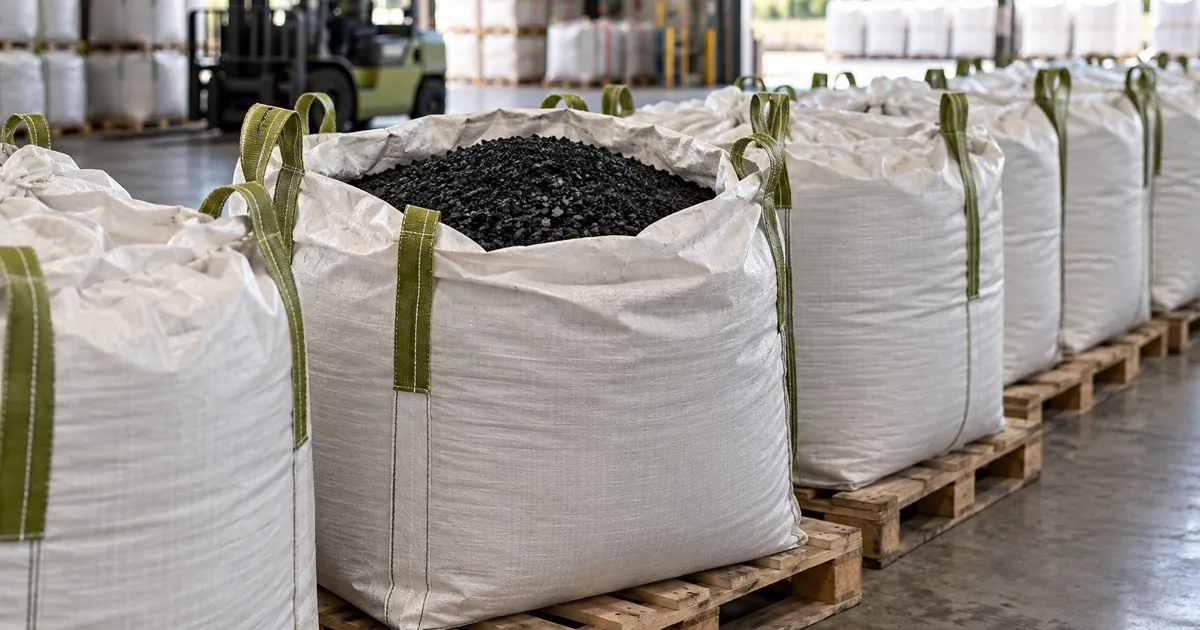
- Packaging. Bulk, big bags and 25 kg bags each have different handling and material costs.
- Volume. Regular, larger volumes and long-term contracts usually allow better terms than one-off orders.
- Logistics and Incoterms. Transport mode, destination and the point where risk and cost transfer to you.
When comparing offers, compare the full delivered cost per tonne of fixed carbon at your plant — not just the ex-works price per tonne of material.
Packaging, MOQ and logistics from Türkiye to Europe
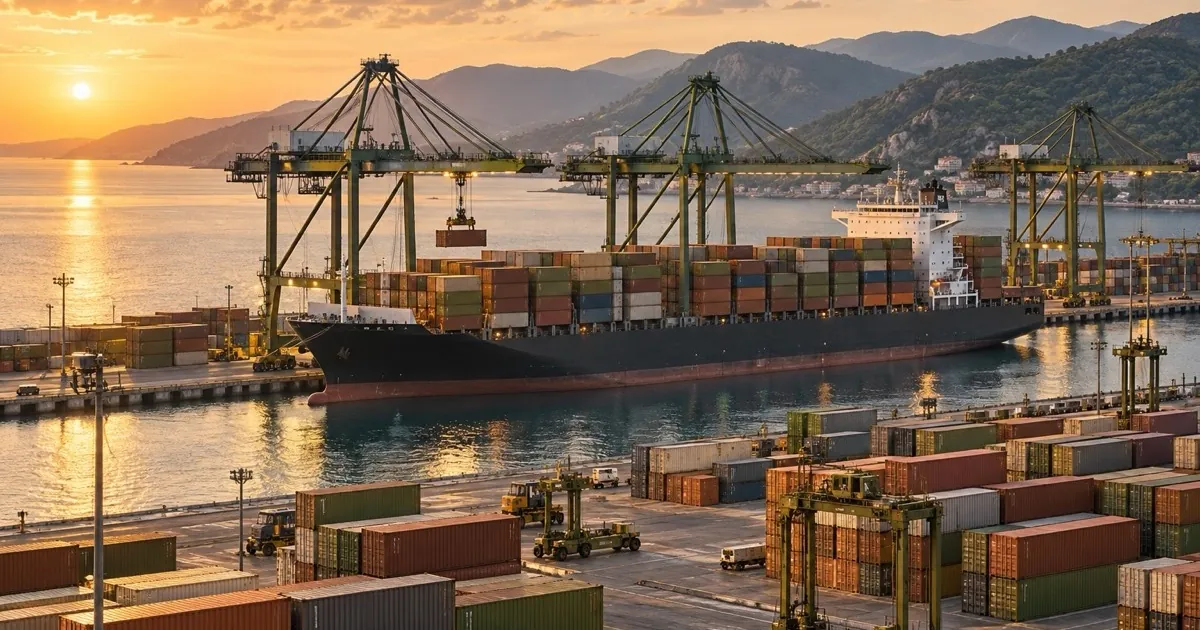
For a buyer in Europe, logistics are part of the specification. Pamecarbon produces in Kavak, Samsun (Türkiye) and exports through the seaports of Samsun and Istanbul. The key terms at a glance:
| Parameter | Options |
|---|---|
| Packaging | Big bags 500–1000 kg, 25 kg bags, or bulk |
| Minimum first order (MOQ) | 1 container (20 t) |
| Regular supply | From 1 to several hundred tonnes per month |
| Ports of loading | Samsun and Istanbul |
| Transport to Europe | Sea, rail or road |
| Transit time | About one week to most European destinations |
| Fractions | 0–3 mm up to 25–50 mm; non-standard on request |
Big bags are the most common choice for metallurgical plants: they are easy to handle with a crane or forklift and protect the material from moisture. Bulk suits high-volume users with their own unloading infrastructure, while 25 kg bags are practical for trials and smaller consumers.
Step-by-step: how to order biochar in bulk
Switching to a new reductant is a technical decision, so the ordering process is built around testing first and scaling up second:
- Inquiry. Send your specification, volume, delivery point and preferred Incoterms via the contact page or to info@pamecarbon.com.
- Samples. We send 2–5 kg of the selected grade with lab data within 5–7 business days. Sample and shipping costs are discussed individually.
- Trial batch. After your lab confirms the sample, a trial batch — typically one container — lets you test the biocoal under real furnace conditions.
- Contract. Once the trial is successful, we agree regular deliveries — a long-term contract with fixed volume and price is possible.
Answers to common questions about documents, terms and shipping are collected in our FAQ.
Why choose a Türkiye-based biocoal supplier
For European buyers, a biocoal supplier in Türkiye combines two advantages that are hard to find together.
Logistics. Türkiye is close to Europe, with established sea, rail and road routes. Shipping from Samsun or Istanbul reaches most European destinations in about a week — shorter and more predictable than overseas supply. Pamecarbon already ships to Germany, France, the United Kingdom, the Netherlands, Belgium, Switzerland and Portugal.
Agricultural feedstock base. Türkiye has a large agricultural sector, which means a steady volume of agricultural production residues. Pamecarbon uses exclusively this agricultural waste — not wood — so no trees are cut. Residues that would otherwise decompose and release CO₂ are turned into stable carbon, which makes production carbon negative. You can read more about Pamecarbon and our production.
For steelmakers, this has a direct climate benefit: according to independent research, replacing fossil coal with biochar can cut specific CO₂ emissions per tonne of steel by 70–90%.
Ready to buy biochar in bulk? Request a quote, samples or a sample CoA — tell us your grade, fraction and volume, and we will come back with an offer.
Frequently asked questions
What is the minimum order quantity for bulk biochar?
The minimum first order is one container (20 tonnes). After that, regular supply from 1 to several hundred tonnes per month is possible.
How is bulk biochar packed?
We ship in big bags of 500–1000 kg, in 25 kg bags, or in bulk. The choice depends on your volume and unloading equipment.
How long does delivery from Türkiye to Europe take?
We export through the ports of Samsun and Istanbul and deliver by sea, rail or road. Transit to most European destinations takes about one week.
Can I get a sample before ordering?
Yes. We send 2–5 kg samples with lab data within 5–7 business days. Sample and shipping costs are discussed individually.